
Subfamilia: LAMIINAE / Tribus: ACANTHOCININI
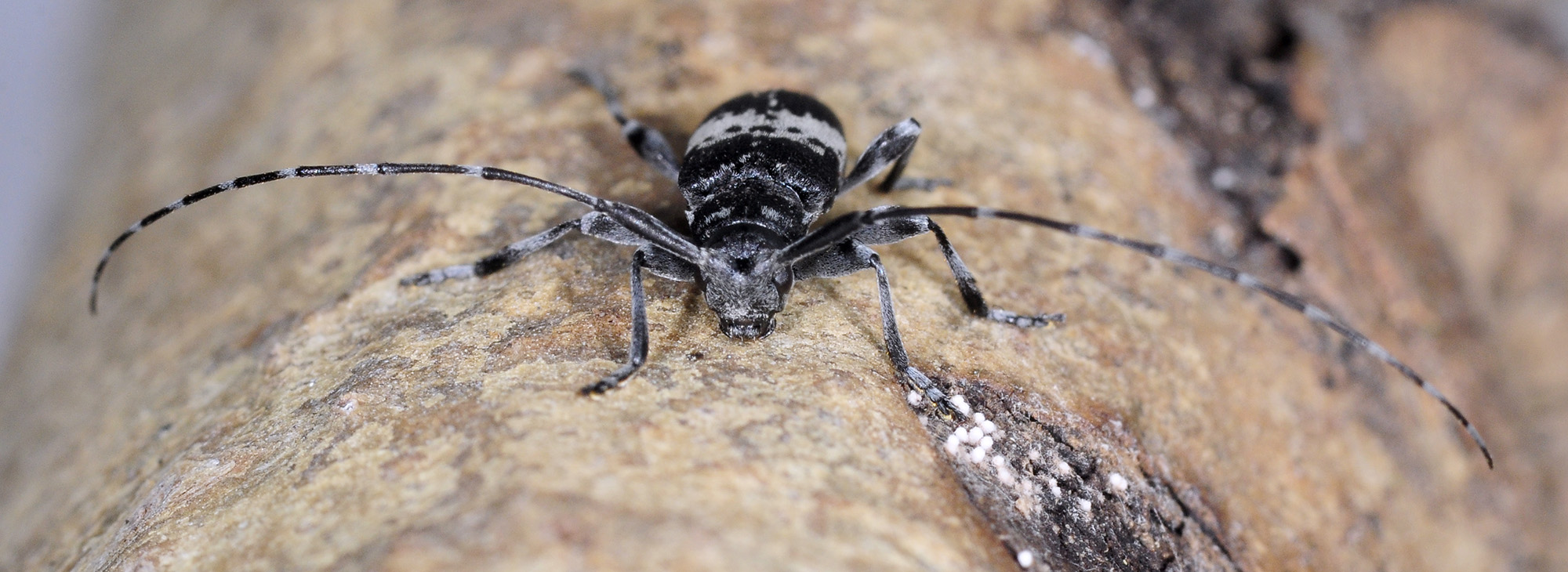
[Photo © Petr Jelínek]
The preferred host plant of this species in Central Europe is white poplar (Populus alba). However, growths of this tree have dramatically declined in Europe and so have the populations of the insect. Especially endangered are populations living in softwood lowland flood-plain forests that are frequently subject to urbanisation or agricultural development. Fortunately, the beetle is able to make do with an alternative host plant, namely aspen (Populus tremula), and even follows this tree species to higher altitudes. In North Europe Populus tremula seems to be the preferred host. Records from black poplar (Populus nigra) need revision in our opinion. Larvae of this beetle feed subcortically in relatively thin dead branches of the host. Shady and moist positions are preferred to sunny ones. The surface of the sapwood under the bark is usually of a dark black colour. Only recently we have found out that this characteristic colouration is caused by a fungus Encoelia fascicularis (Åke Lindelöw, personal communication, 2002). The larvae build a pupal cell directly under the bark using a fibrous frass of a contrasting white colour.
Body length: 6 - 8 mm Life cycle: 1 - 2 years Adults in: May - July Host plant: chiefly poplars (Populus tremula, nigra and alba) Distribution: Europe
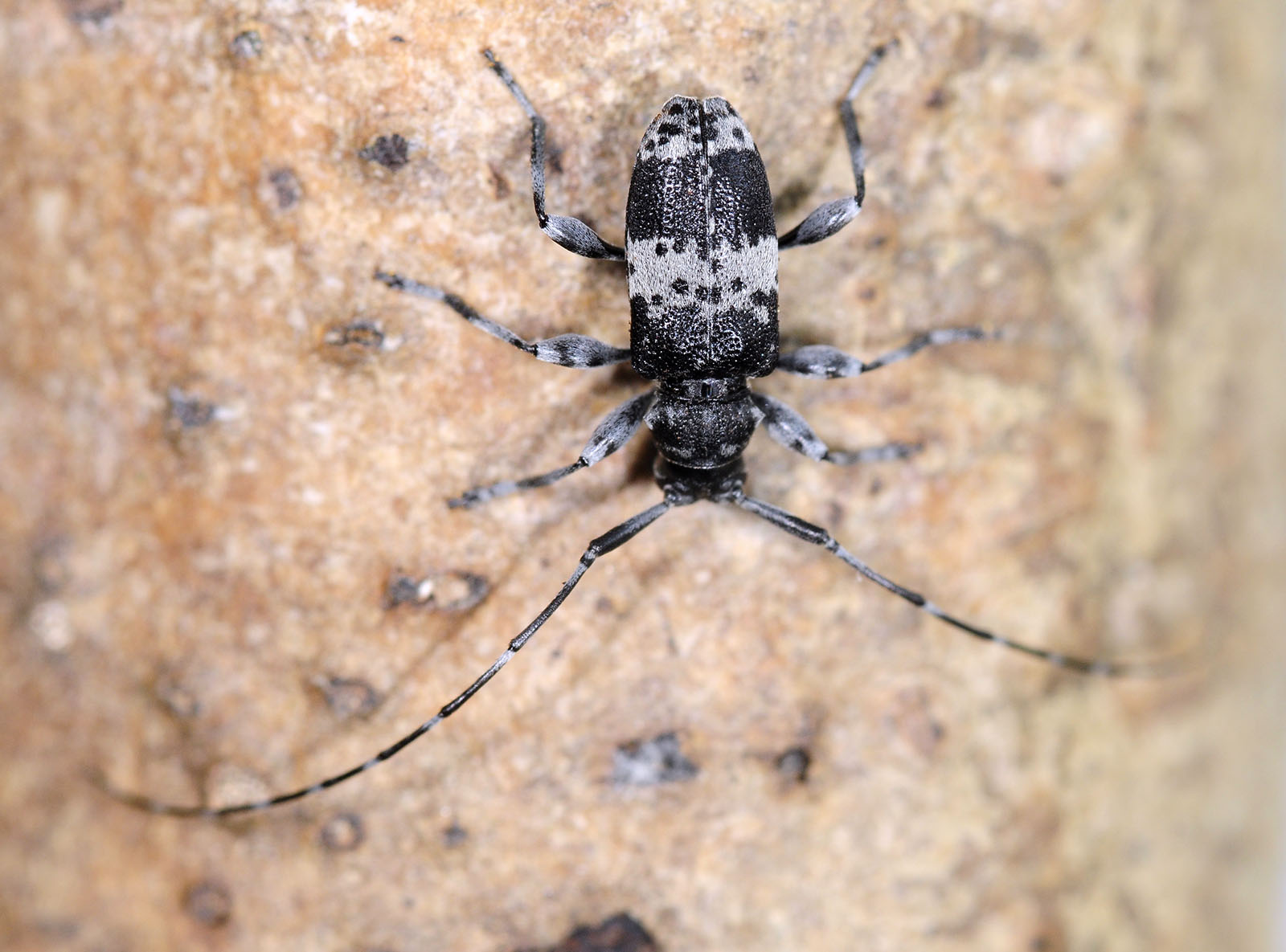
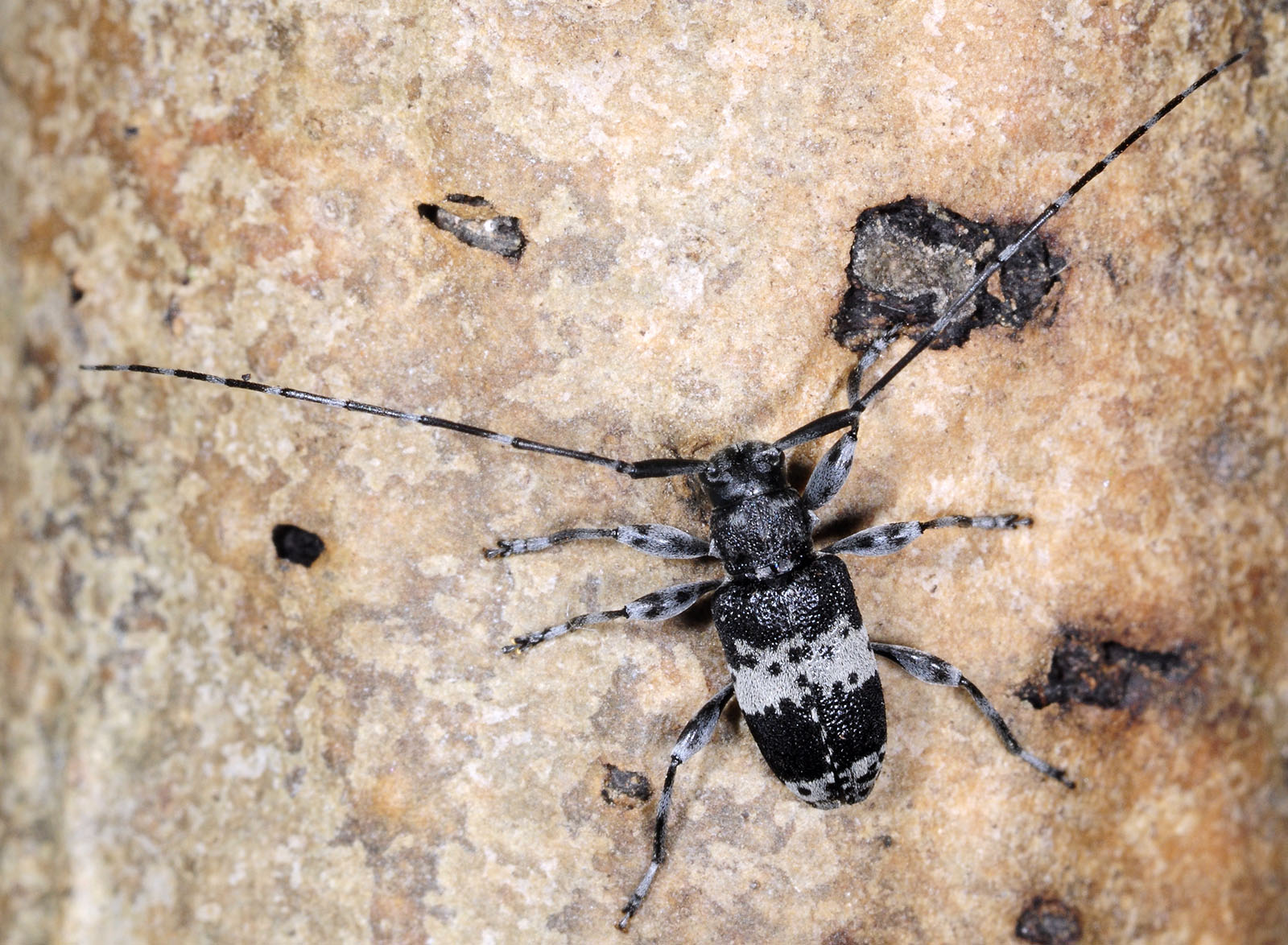
The depicted beetles were reared from praepupae found in pupal cells built under the bark of dead branches of white poplar (Populus alba). The praepupae were collected in Ivaň environs and Niva Dyje Natural Park (Břeclav district, South Moravia, Czechia) in spring 2003 and 2019.Collected by Petr Jelínek, Michal Hoskovec and Daniel Rydzi
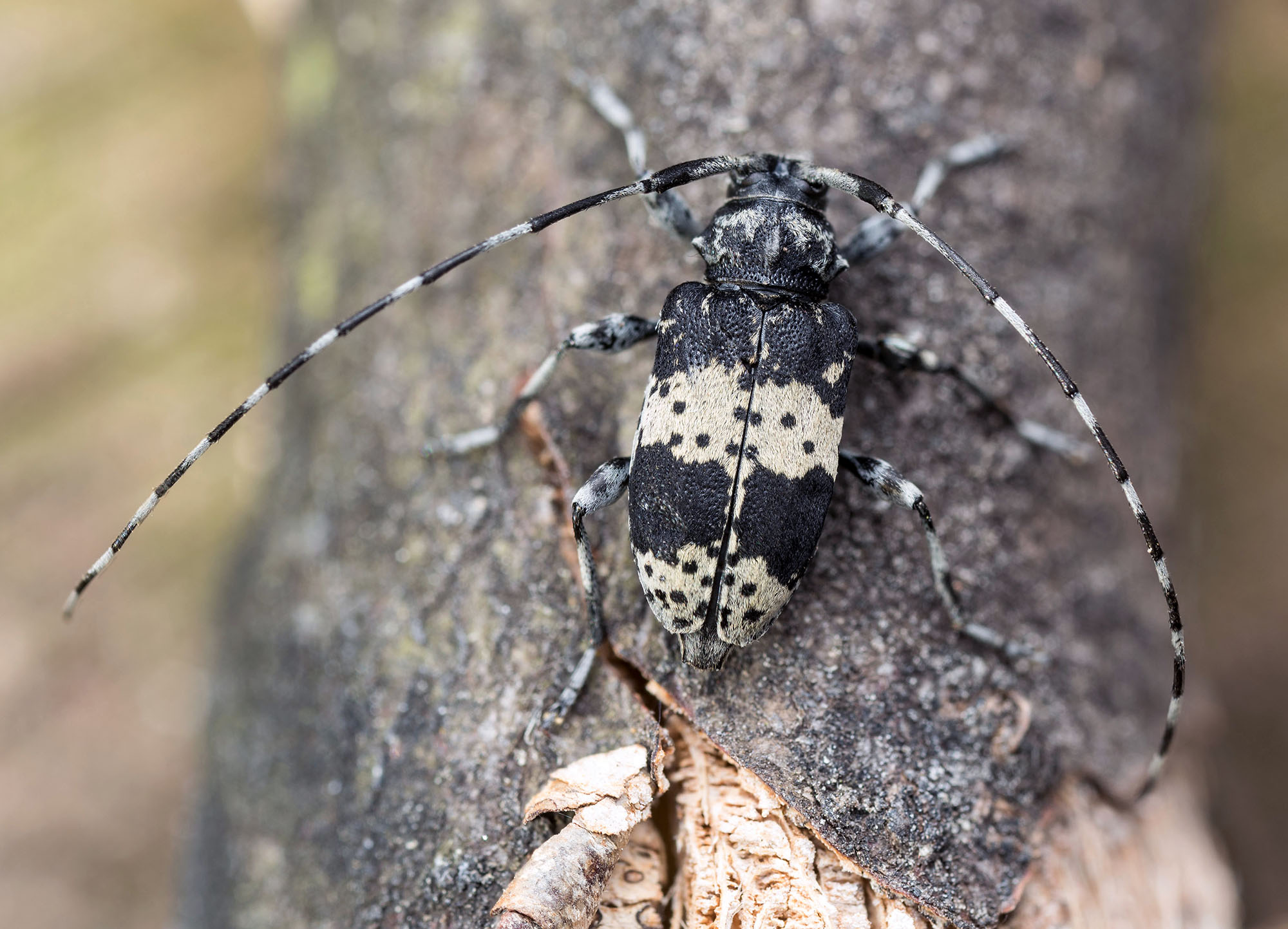
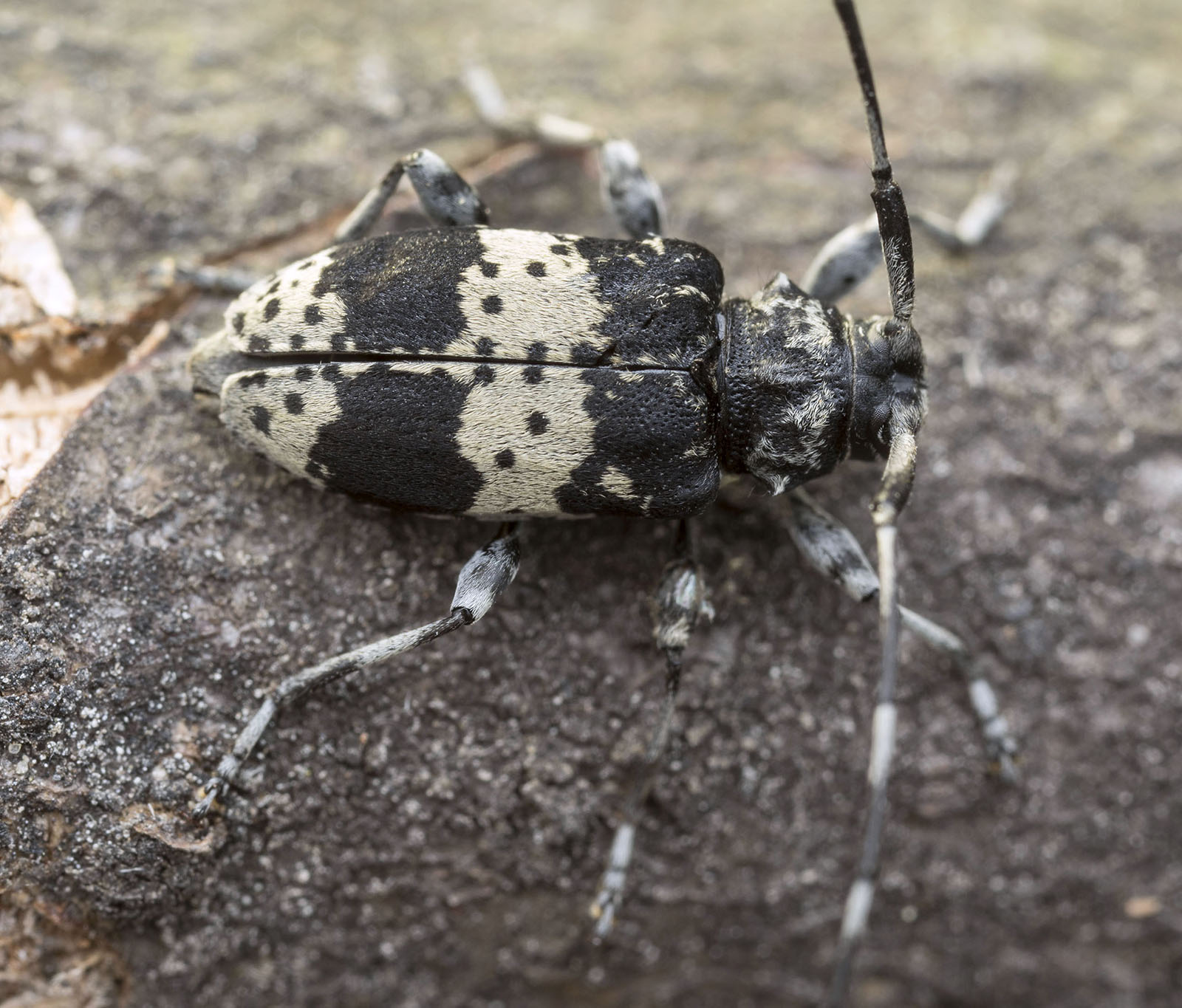
[Photo © Daniel Rydzi]
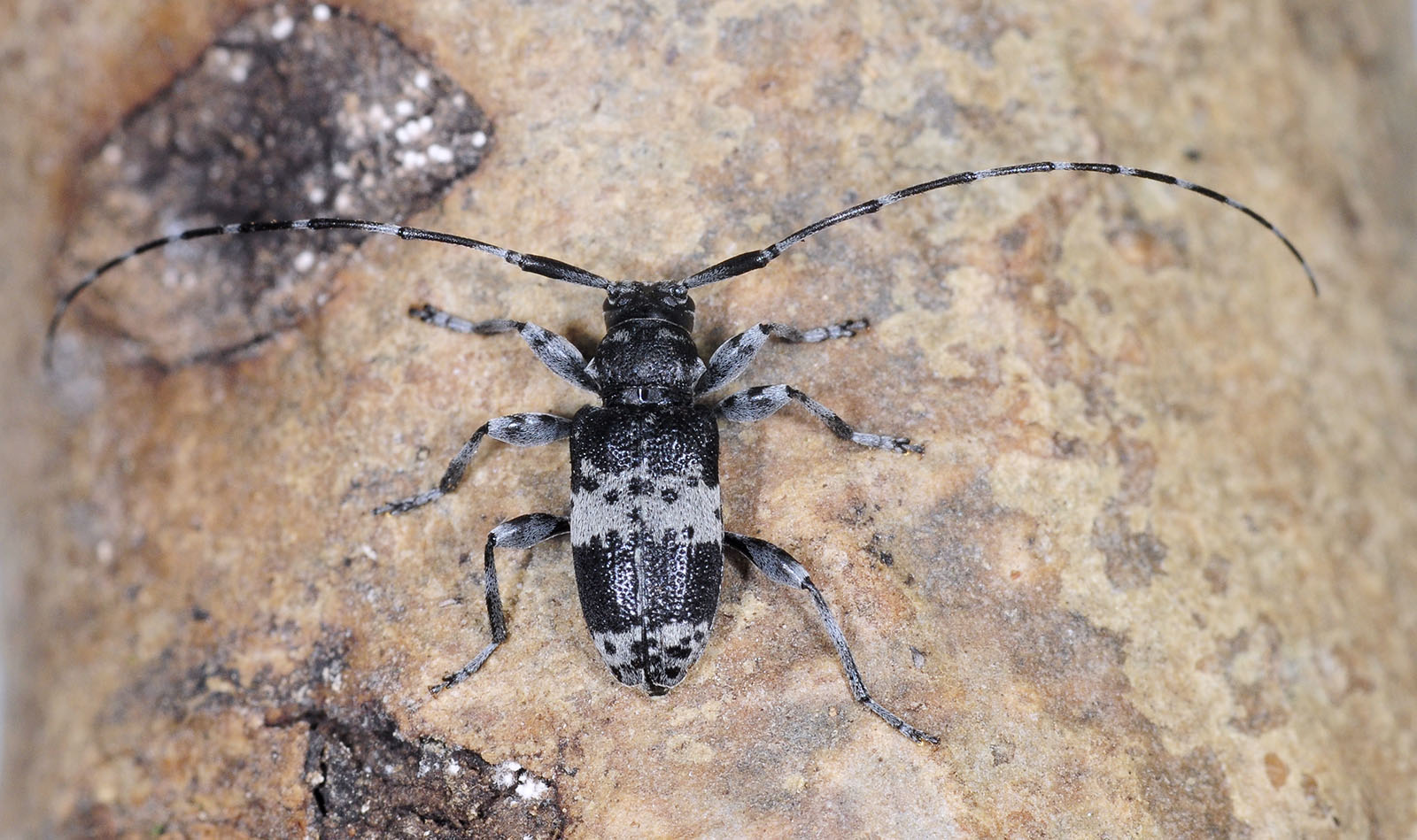
[Photo © Petr Jelínek]
| Subfamilia | Lamiinae Latreille, 1825 |
| Tribus | Acanthocinini Blanchard, 1845 |
| Genus | Leiopus Audinet-Serville, 1835 |
| Subgenus | Leiopus Audinet-Serville, 1835 |
| Species | Leiopus (Leiopus) punctulatus (Paykull, 1800) |