
Subfamilia: CERAMBYCINAE / Tribus: CALLIDIINI
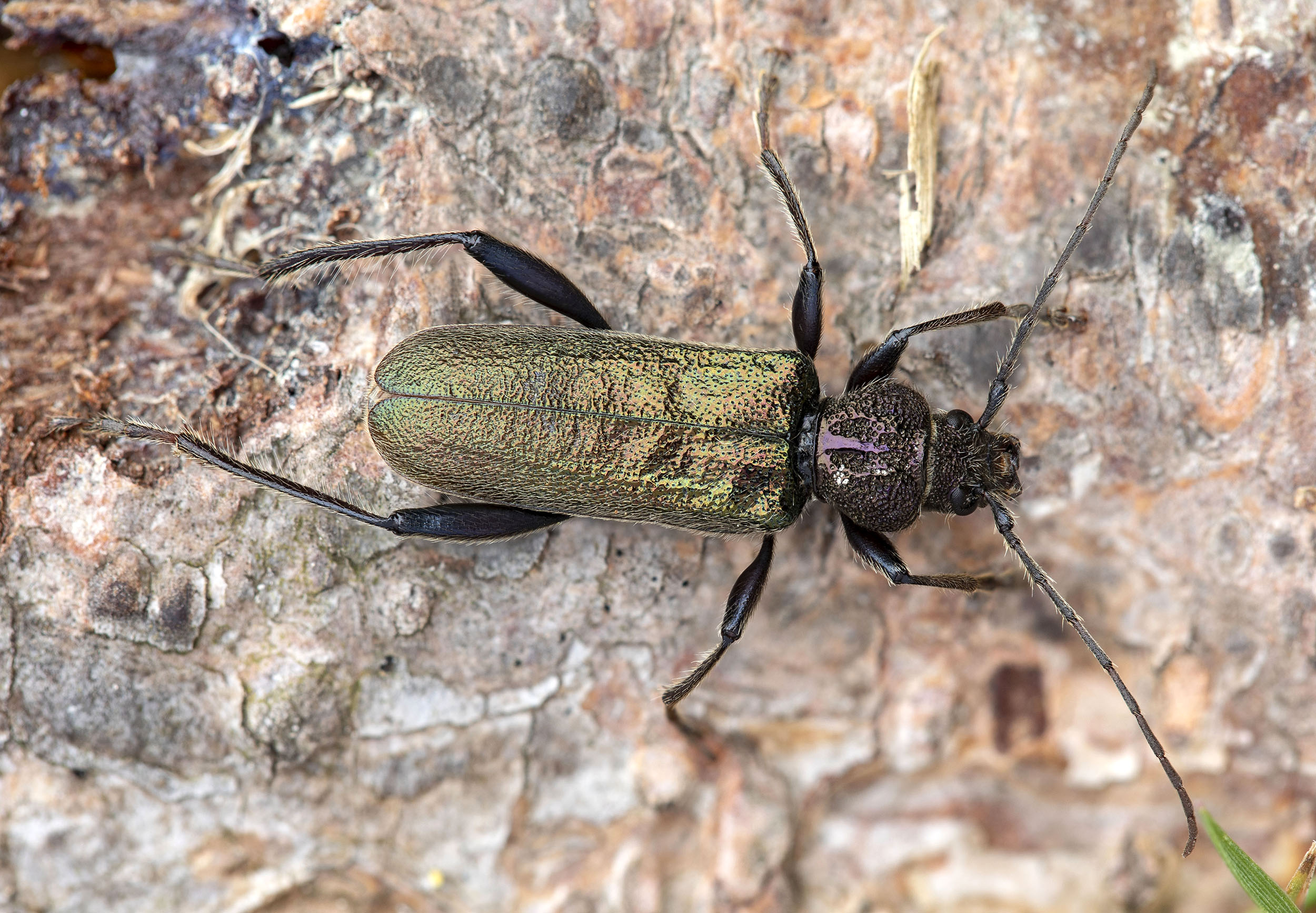
Callidium coriaceum ♀ [Photo © Daniel Rydzi]
Callidium coriaceum is a rare montane/submontane species associated mainly with Norway spruce (Picea abies) in Central Europe. In N Slovak Republic the authors of this site have once observed the species flying to a dying spruce of a large diameter. One day spent in a close proximity to the tree resulted in capturing about 12 specimens of this rare animal. Although the beetle seems to be coloured in a rather striking way it is very difficult to see it on the bark of a spruce. Moreover the beetles tend to hide in bark crevices as soon as they land. The larvae of this species feed subcortically and later they enter the sapwood where they build the pupal cells. Recently dead standing spruce trees are the preferred larval substrate [❖].
Body length: 8 - 16 mm Life cycle: 2 years Adults in: June - August Host plant: coniferous trees (Picea, Abies, Pinus) Distribution: Central, East and North Europe, France
The living specimens were: (DR) - photographed close to "Pod Portášovými Boudami" touristic trails crossing in Velká Úpa settlement environs (Pec pod Sněžkou, Krkonoše Mts., Trutnov district, Hradec Králové region, North-East Bohemia, Czechia) on July 27, 2022; (PJ) - reared from larvae found in dead Norway spruce (Picea abies) in Kraví Hora environs (Novohradské Hory Mts., South Bohemia, Czechia) in winter 2020.Collected by Daniel Rydzi and Petr Jelínek
[❖]
Sláma M.E.F.:
Tesaříkovití – Cerambycidae České republiky a Slovenské republiky / Cerambycidae of the Czech Republic and Slovak Republic.
Milan Sláma private printing, Krhanice, 383pp [pages 139-140], 1998 [ISBN: 80-238-2627-1]. [download]
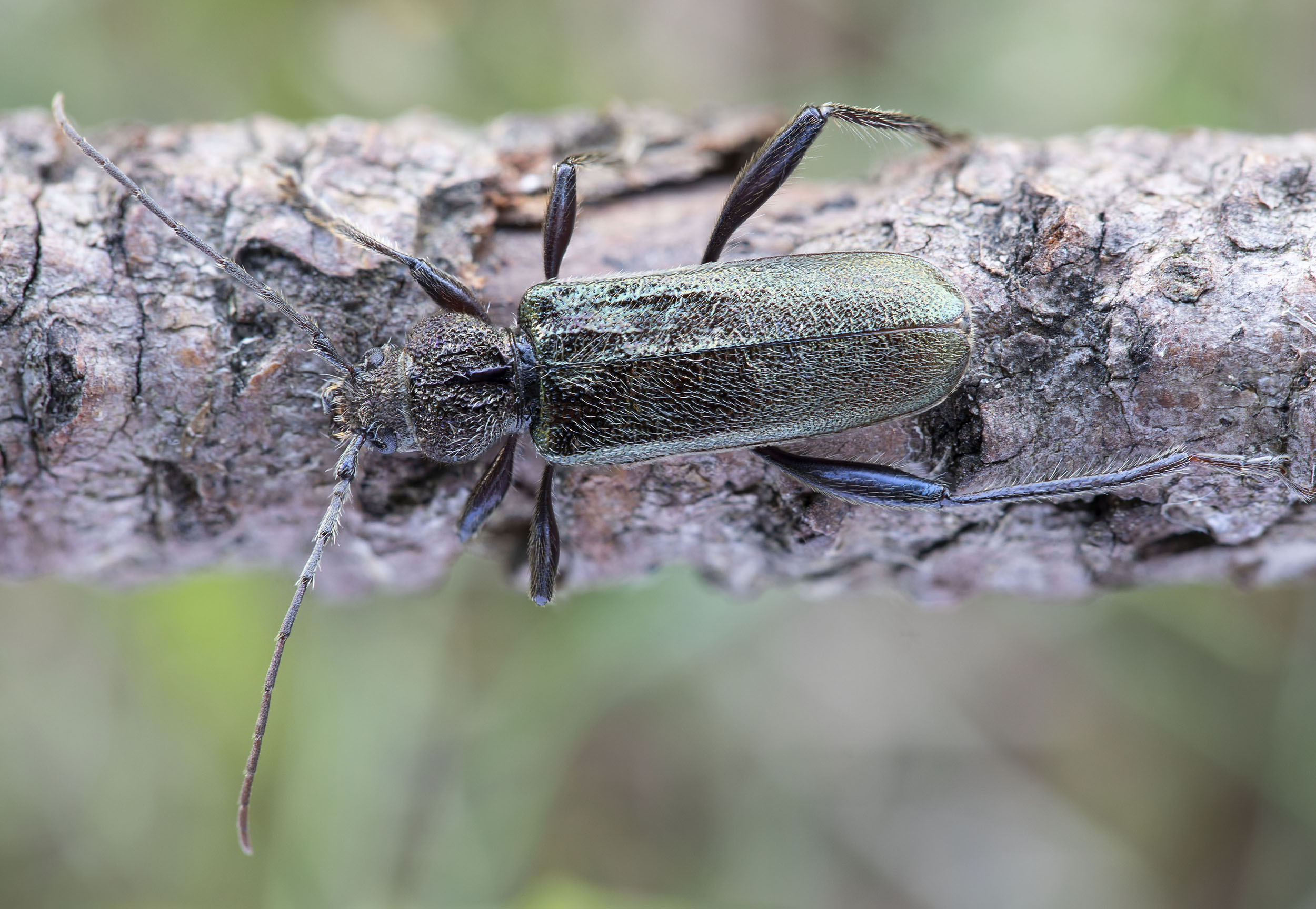
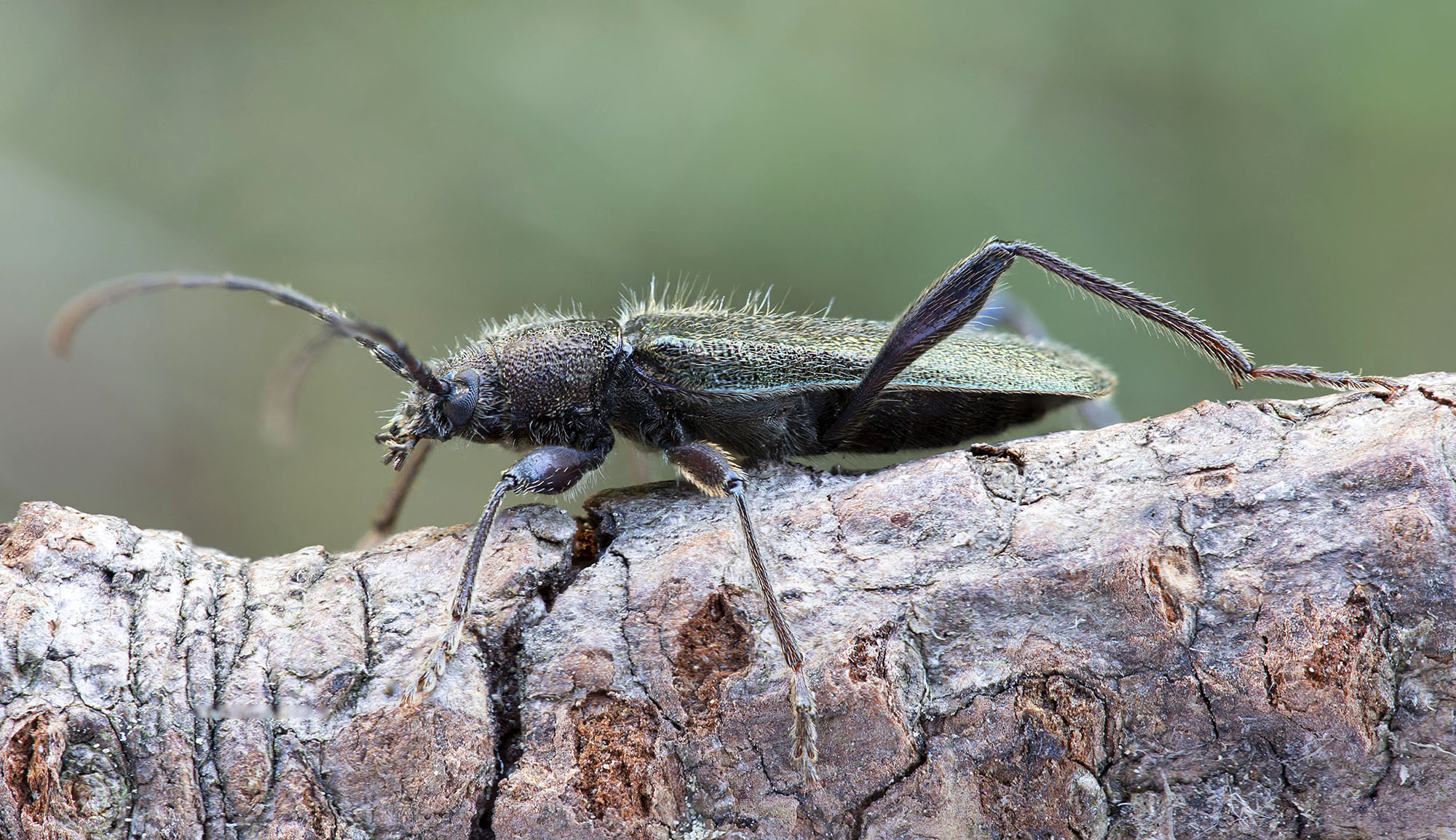
Callidium coriaceum ♀ [Photo © Daniel Rydzi]
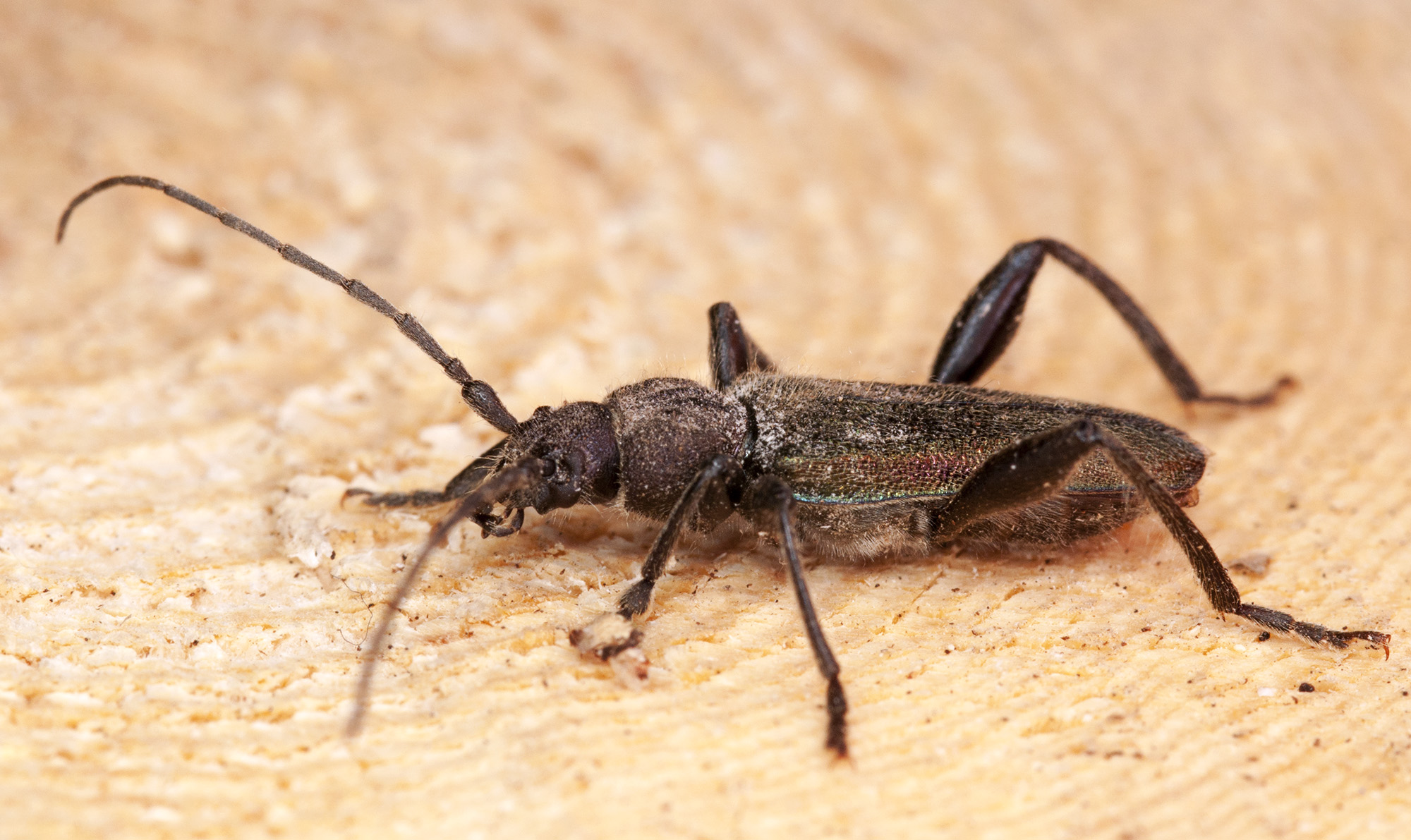
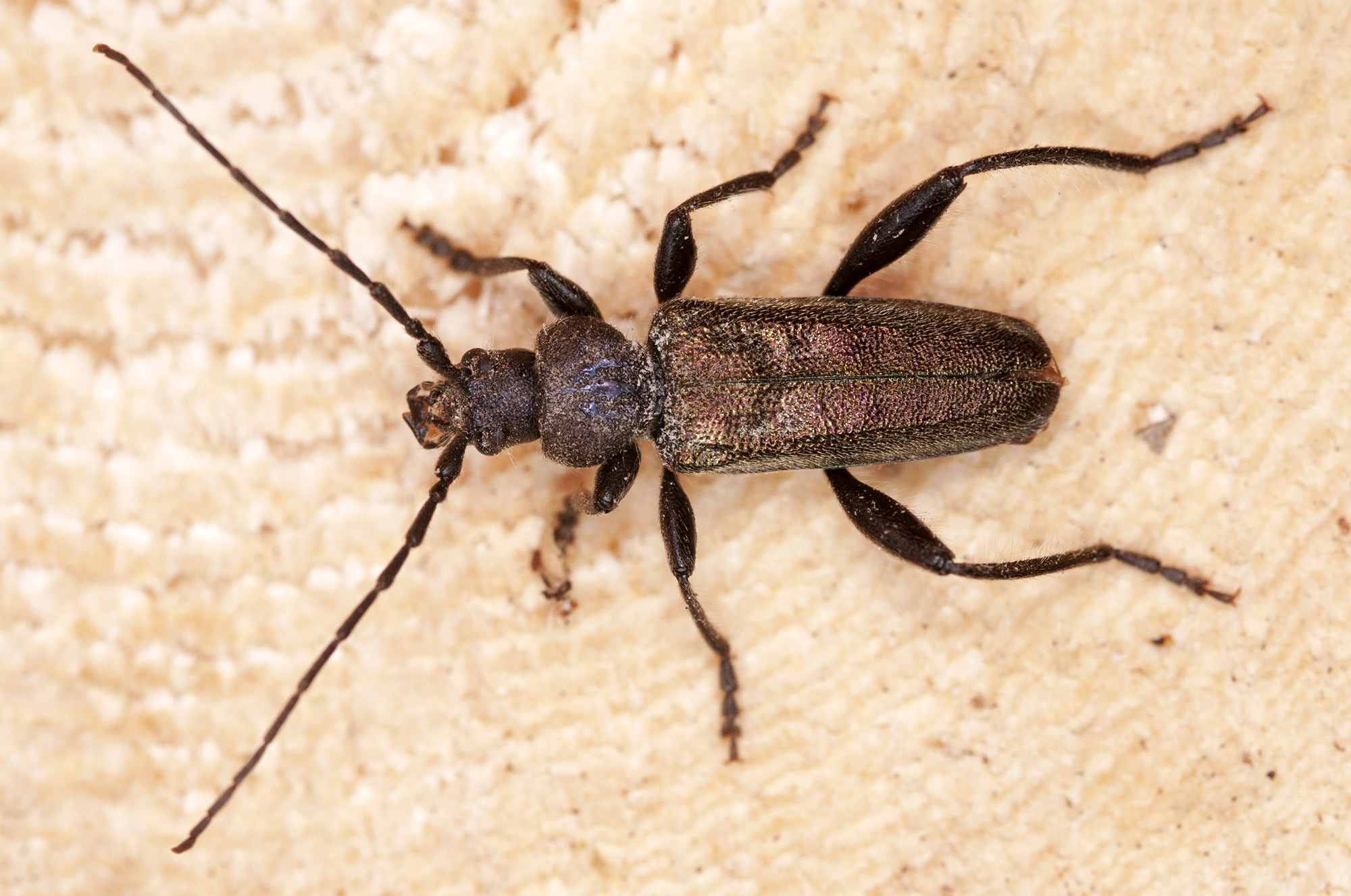
Callidium coriaceum ♂ [Photo © Petr Jelínek]
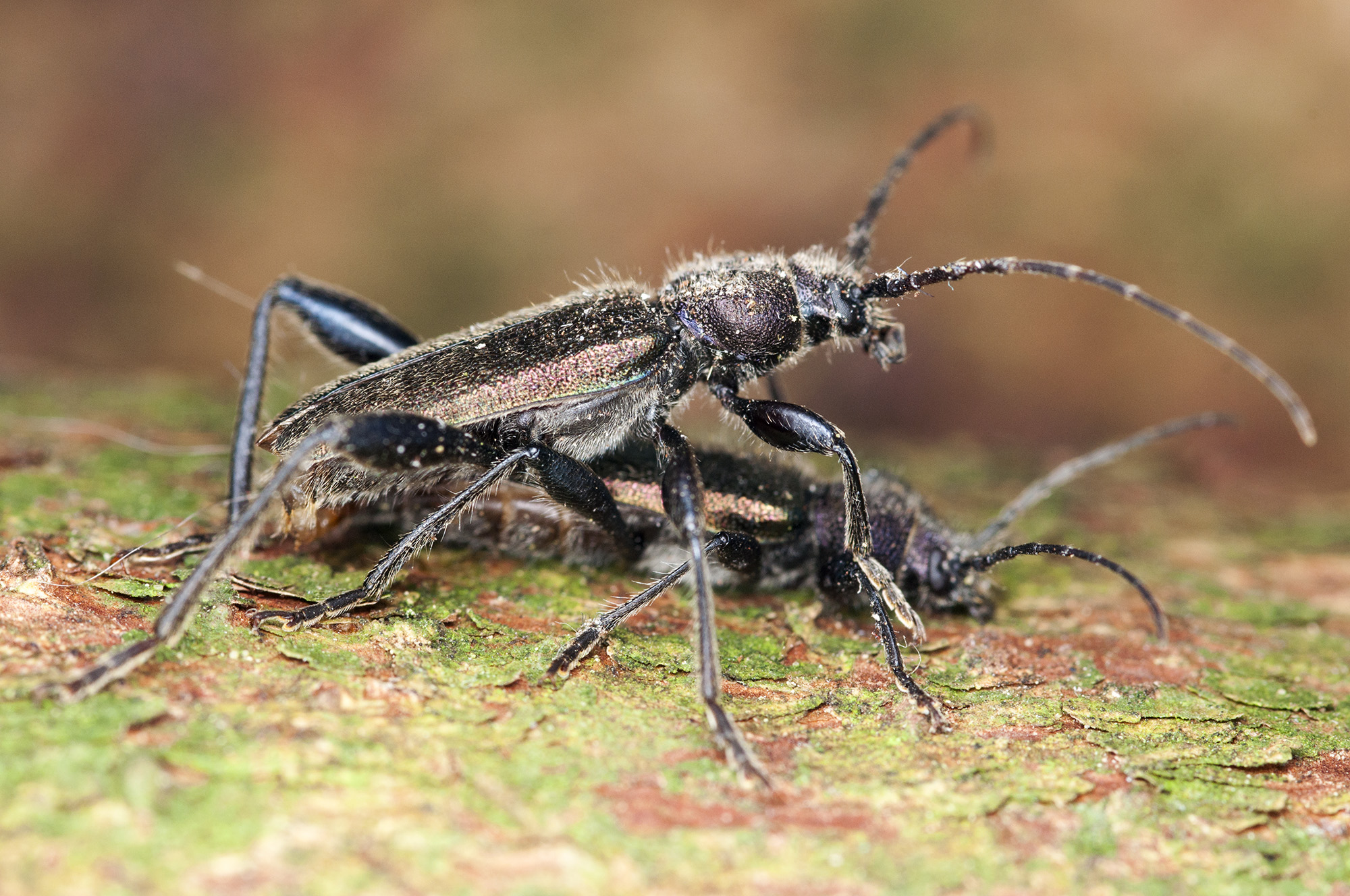
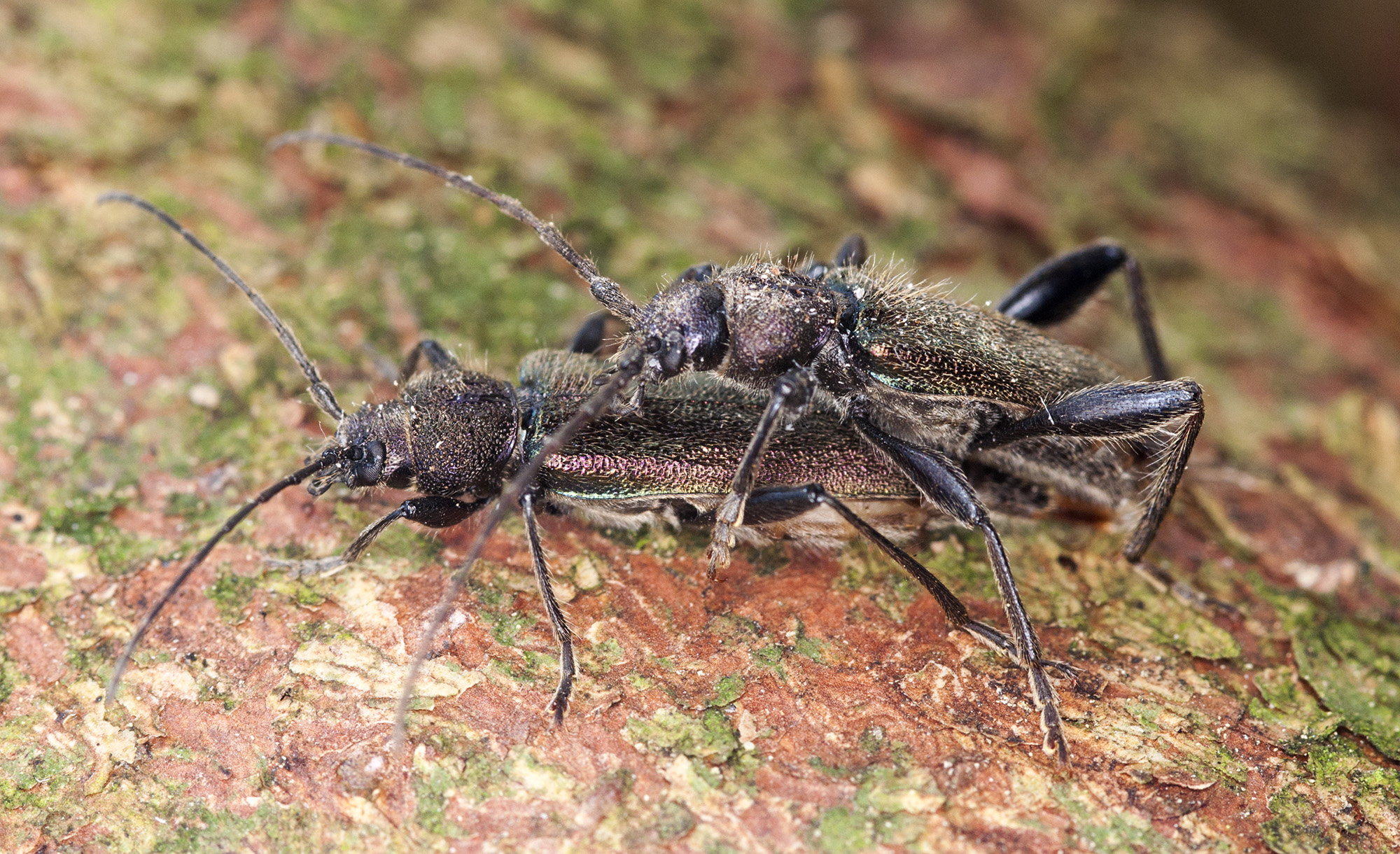
Callidium coriaceum ♂ + ♀ [Photo © Petr Jelínek]
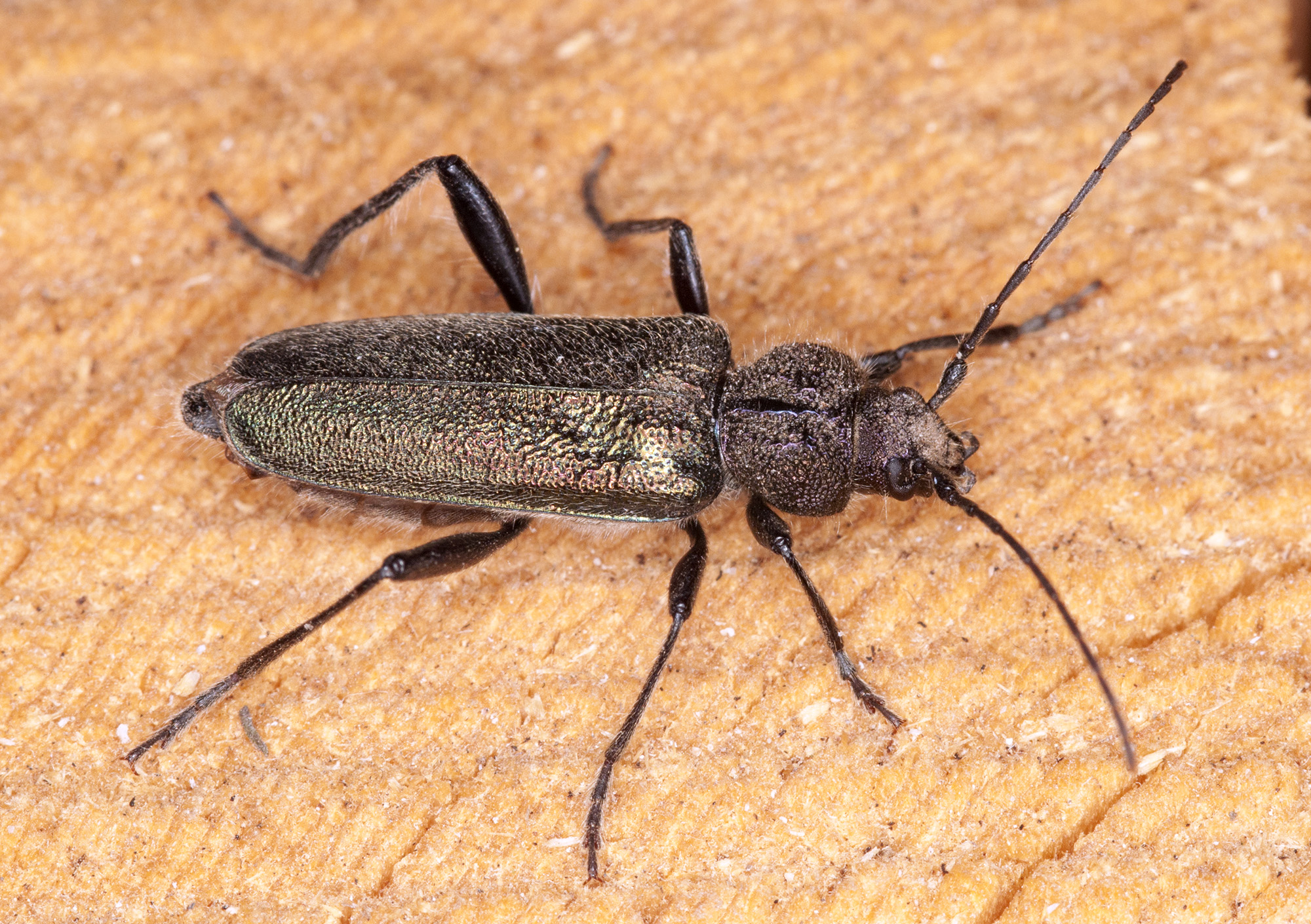
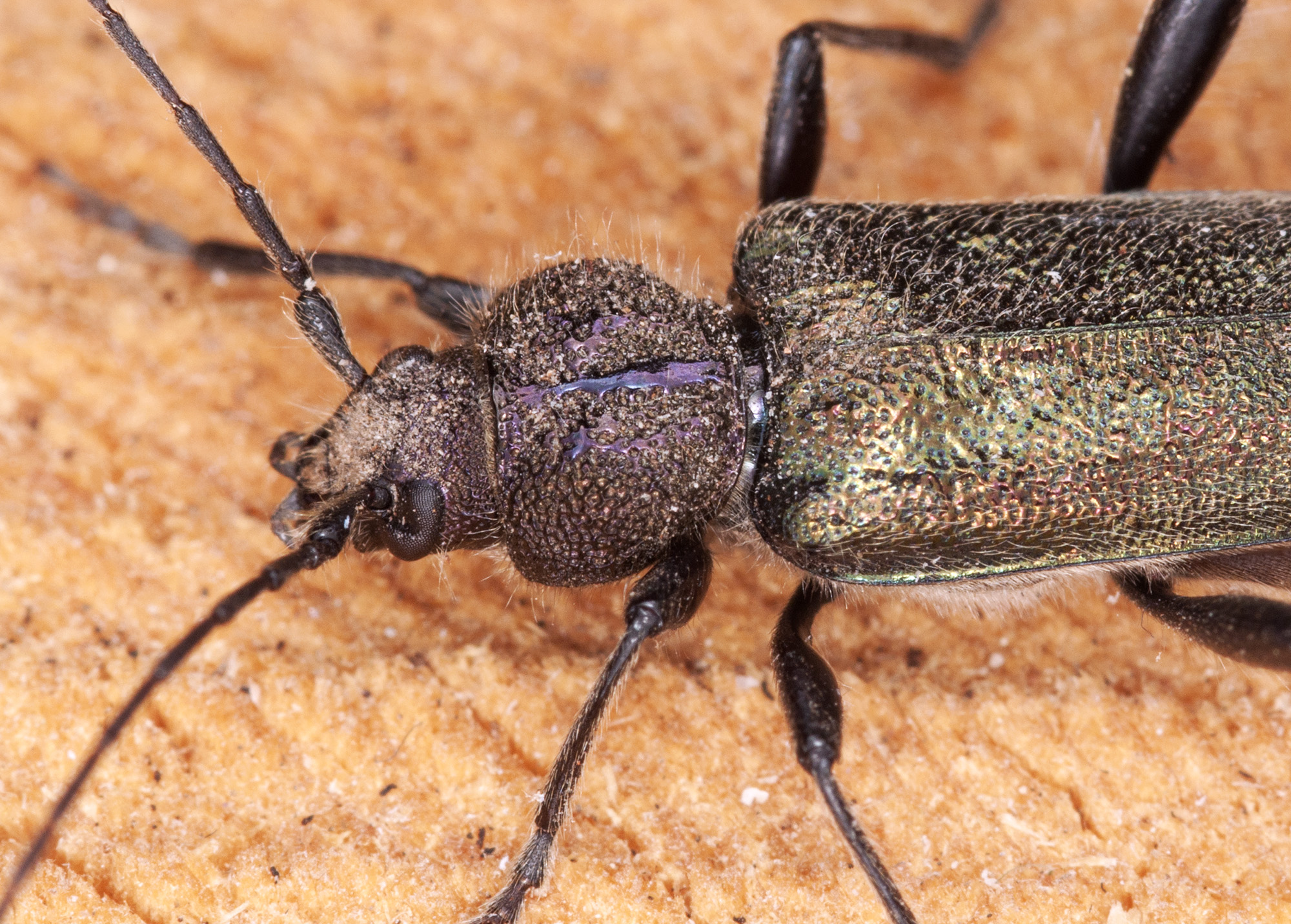
Callidium coriaceum ♀ [Photo © Petr Jelínek]
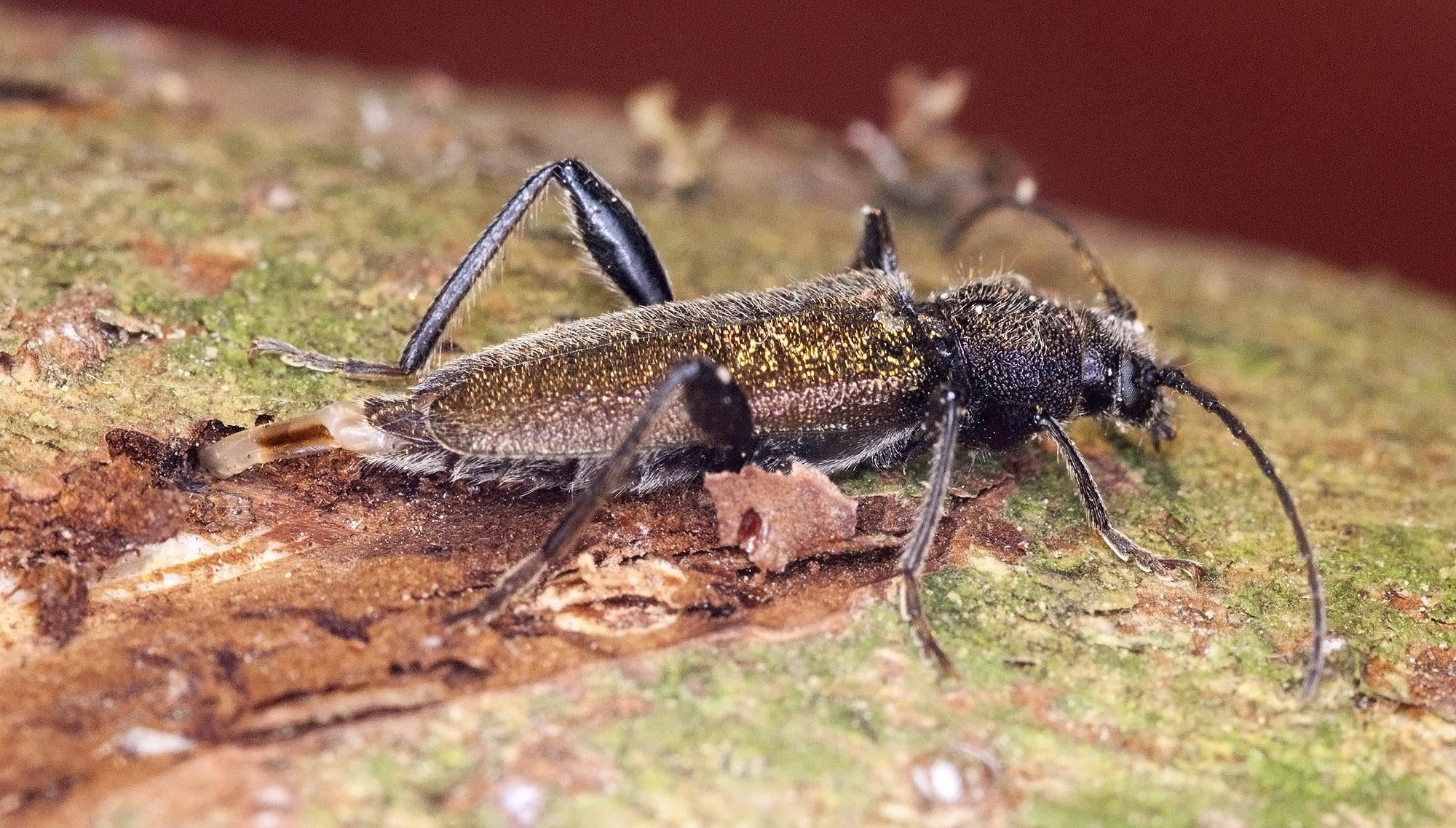
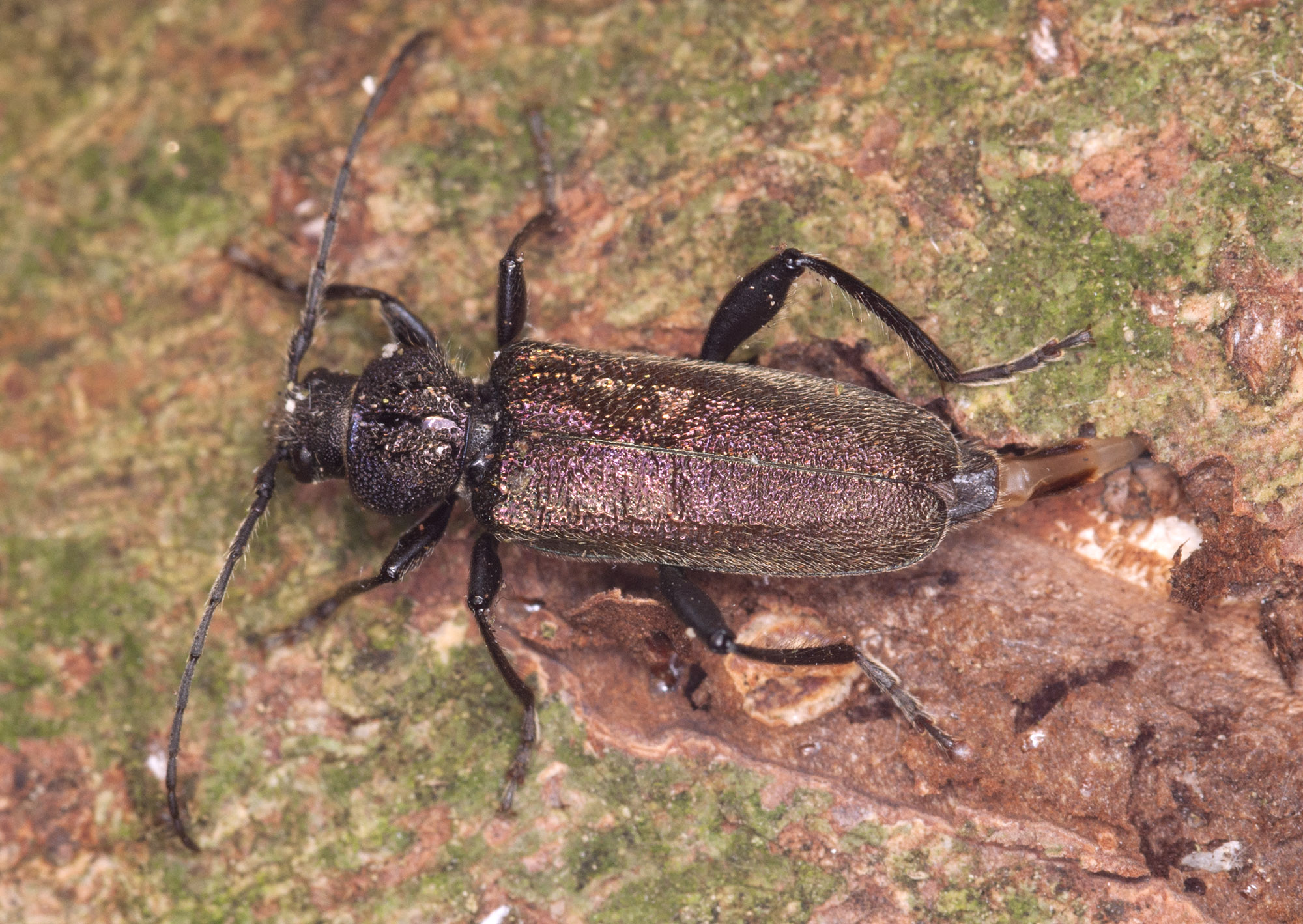
ovipositing Callidium coriaceum ♀ [Photo © Petr Jelínek]
| Subfamilia | Cerambycinae Latreille, 1802 |
| Tribus | Callidiini Mulsant, 1839 |
| Genus | Callidium Fabricius, 1775 |
| Subgenus | Palaeocallidium Plavilstshikov, 1940 |
| Species | Callidium (Palaeocallidium) coriaceum Paykull, 1800 |