
ssp. alpina (Linnaeus, 1758)
Subfamilia: CERAMBYCINAE / Tribus: COMPSOCERINI
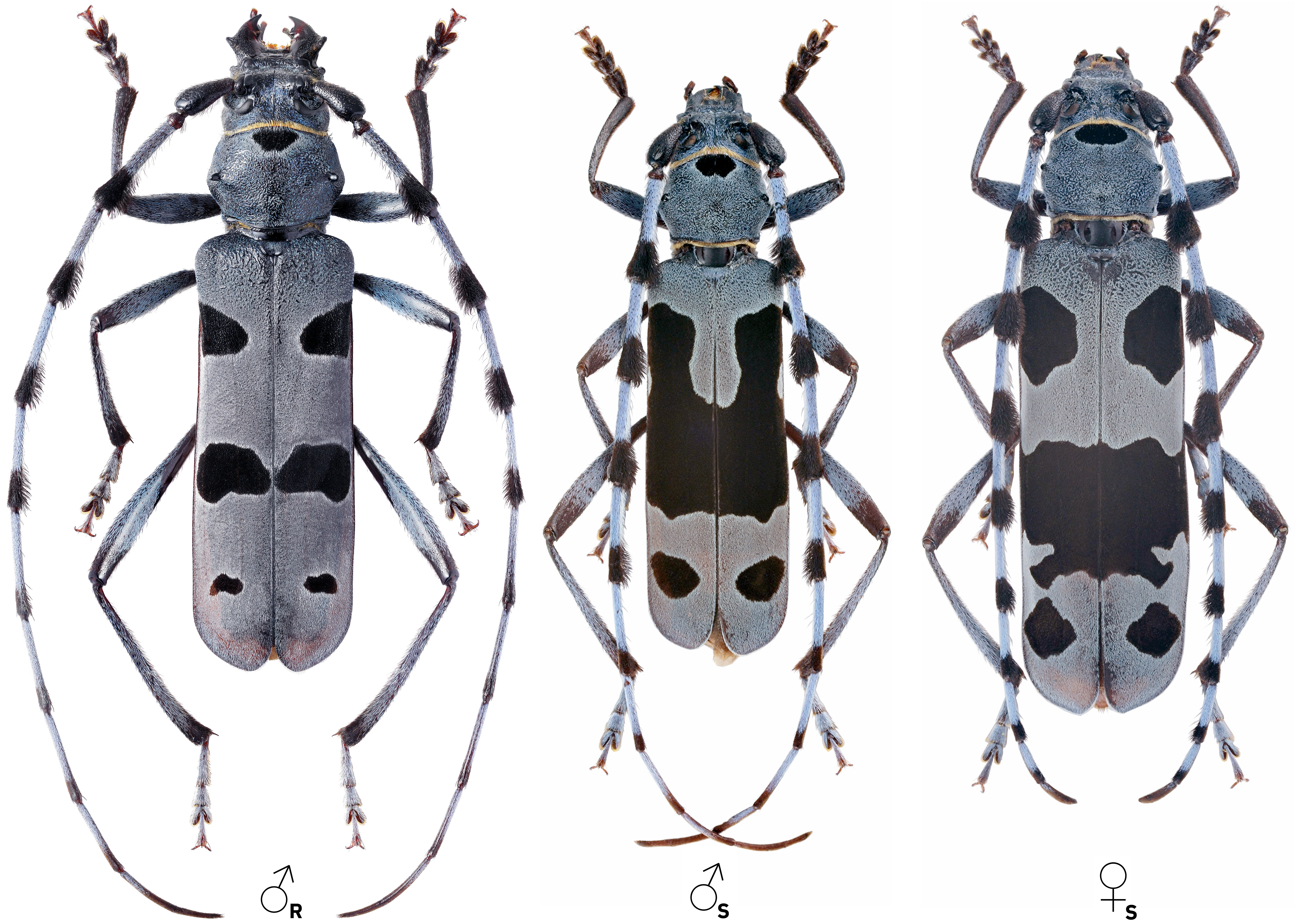
[Photo © Kirill V. Makarov and Roman Hergovits, click on the picture for 4K resolution]
Rosalia alpina, well known and one of the most beautiful European longhorn beetles, has been described from Switzerland as Cerambyx alpinus by Carl Linné in 1758 [✮]. R. alpina is an endangered and strictly protected icon of saproxylic biodiversity throughout its Europen range of occurence. Despite its popularity, information on its habitats and host-plants is insufficient, which may compromise the adoption of suitable conservation strategies. Rosalia alpina has been considered as montane/submontane species associated with beech (Fagus sylvatica) in Central Europe, whereas in Southern Europe the species has often been reported from lowlands and its host spectrum is broader.
R. alpina larvae develop most often in the thicker dead branches of standing trees, in the dead barkless parts of living trees, or in the surface wood of trunk cavities. Relatively less often in wood lying on the ground under suitable moisture conditions. Life cycle 3-4 years. Adults, active from June to August, can be found on the host trees [✳].
Lukáš Čížek et al. [❖] published evidence of an elm-feeding population of Rosalia alpina occurring in a lowland beech-free forests in the Czech Republic. This information available suggests, that Rosalia alpina spreads into central European lowland forests along large rivers, and that spectra of hosts and habitats exploited by Rosalia alpina in Central Europe are wider than generally thought. Alteration of its habitat preference has either occurred in Central European populations, or lowland-inhabiting populations from the South are spreading northwards, possibly due to climate change. Interesting insight into phylogeography of R. alpina offers work of Lukáš Drag et al. published in 2017 [▽].
Guidelines for the monitoring of this remarkable beetle, which is protected by the EU Habitats Directive, was summarized in detail in paper by Alessandro Campanaro et al. in 2017 [✧].
Body length: 15 - 38 mm Life cycle: 2 - 3 years Adults in: June - August Host plant: polyphagous in deciduous trees, preferring beech (Fagus), but also in Ulmus, Carpinus, Tilia, Castanea, Fraxinus, Acer etc. Distribution: Albania, Austria, Belarus, Bosnia and Herzegovina, Bulgaria, Corsica, Croatia, Czechia, France, Germany, Greece, Hungary, Italy, Macedonia, Montenegro, Poland, Romania, Russia, Serbia, Sicily, Slovakia, Slovenia, Spain, Switzerland, Turkey, Ukraine
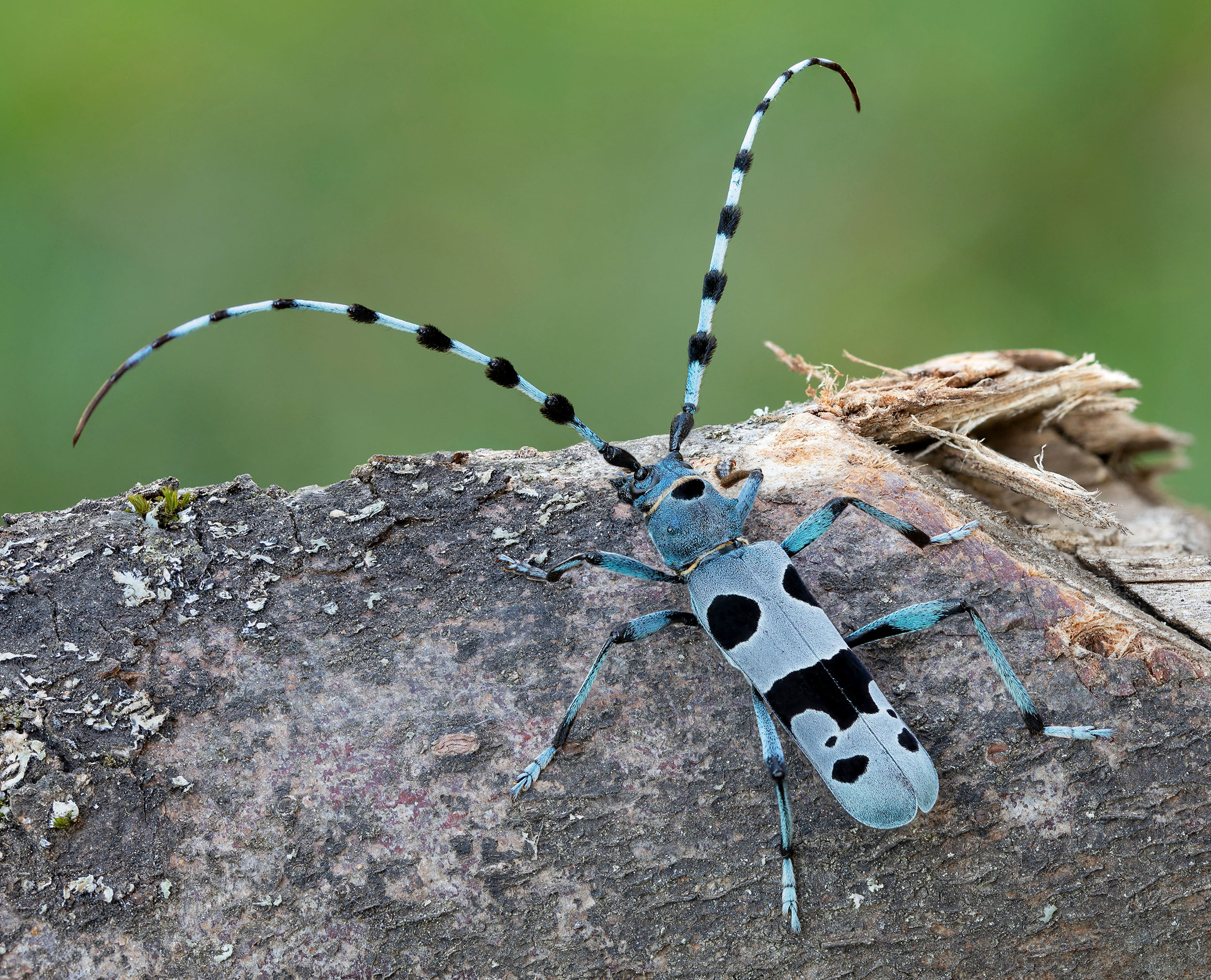
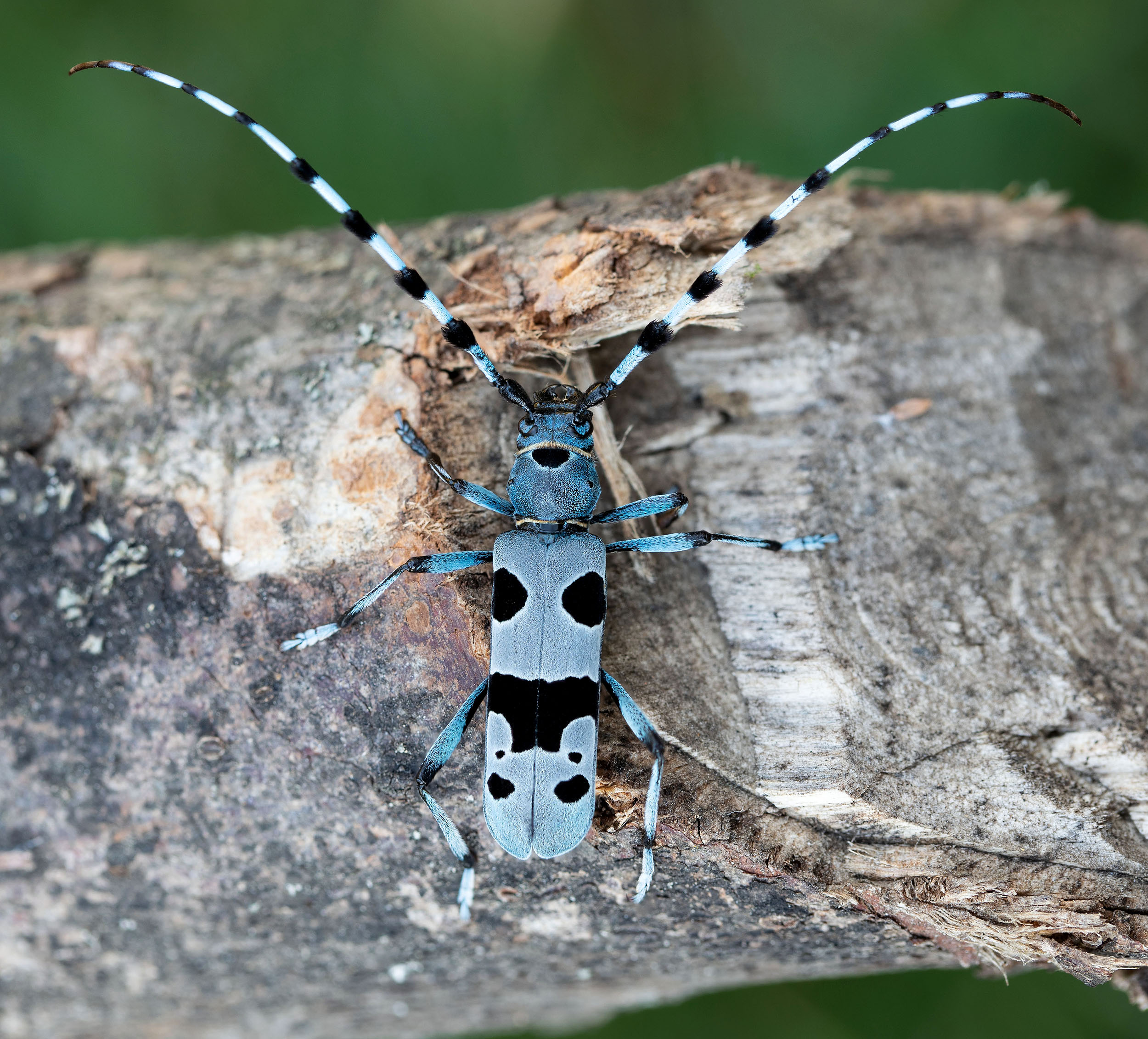
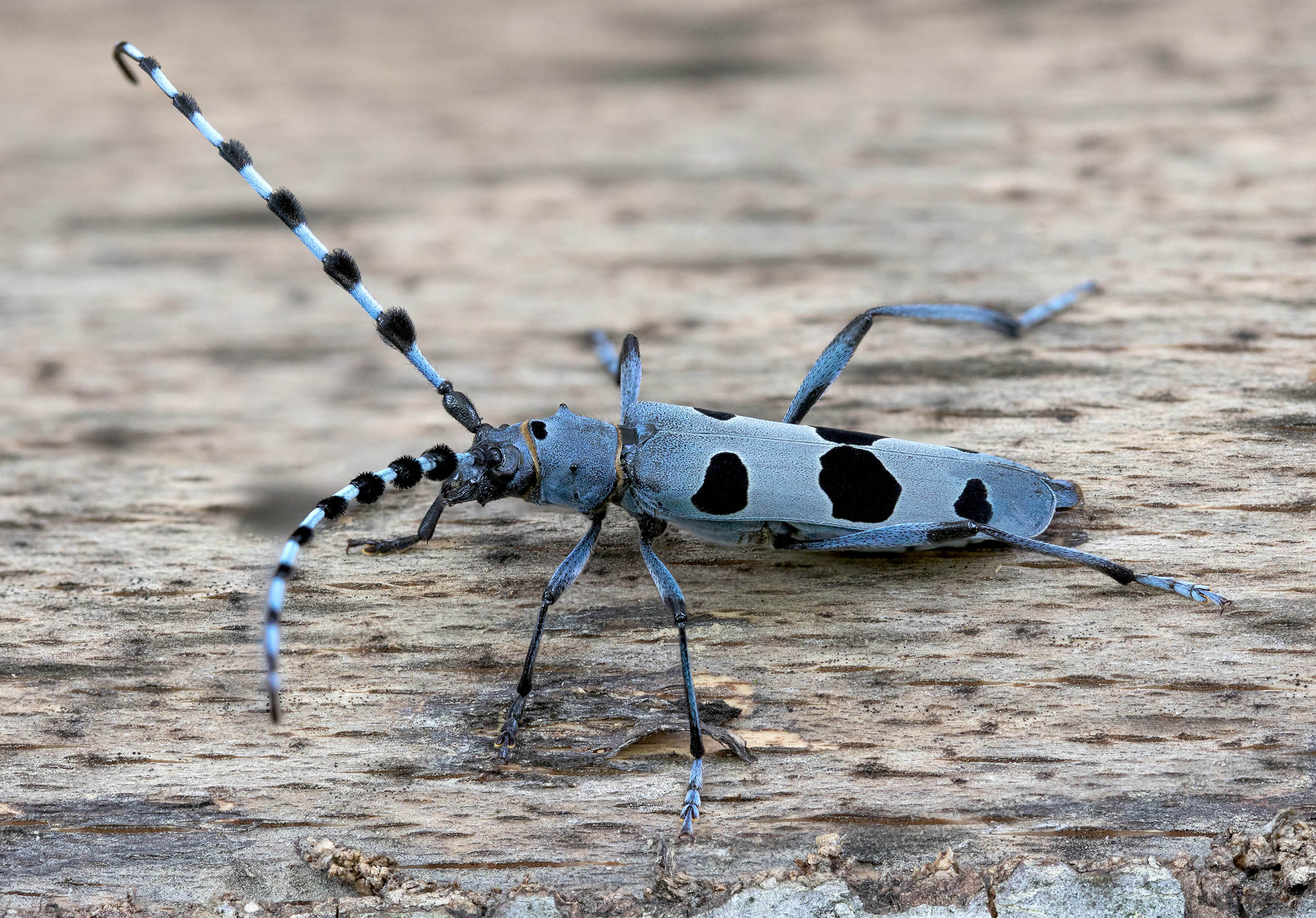
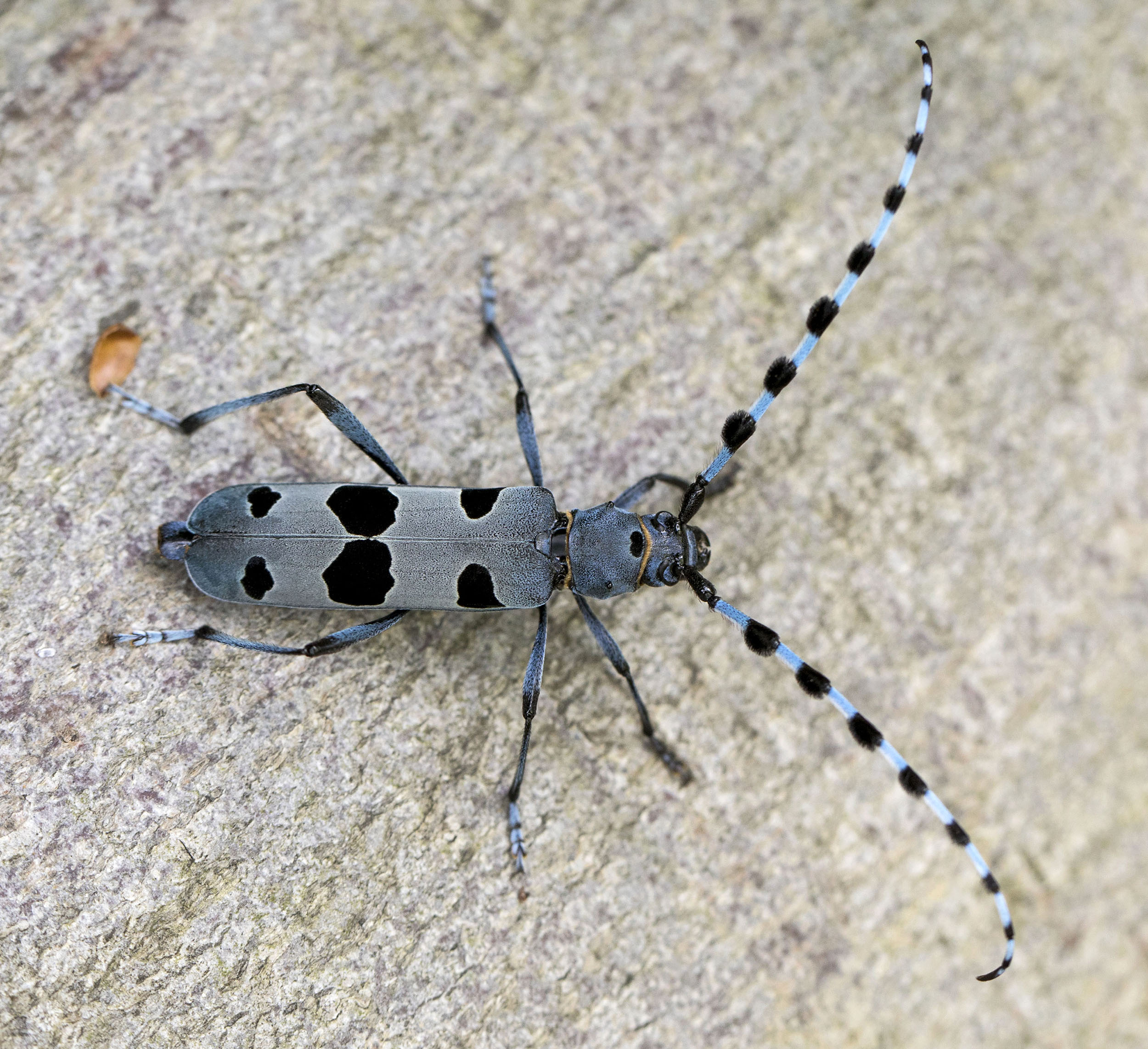
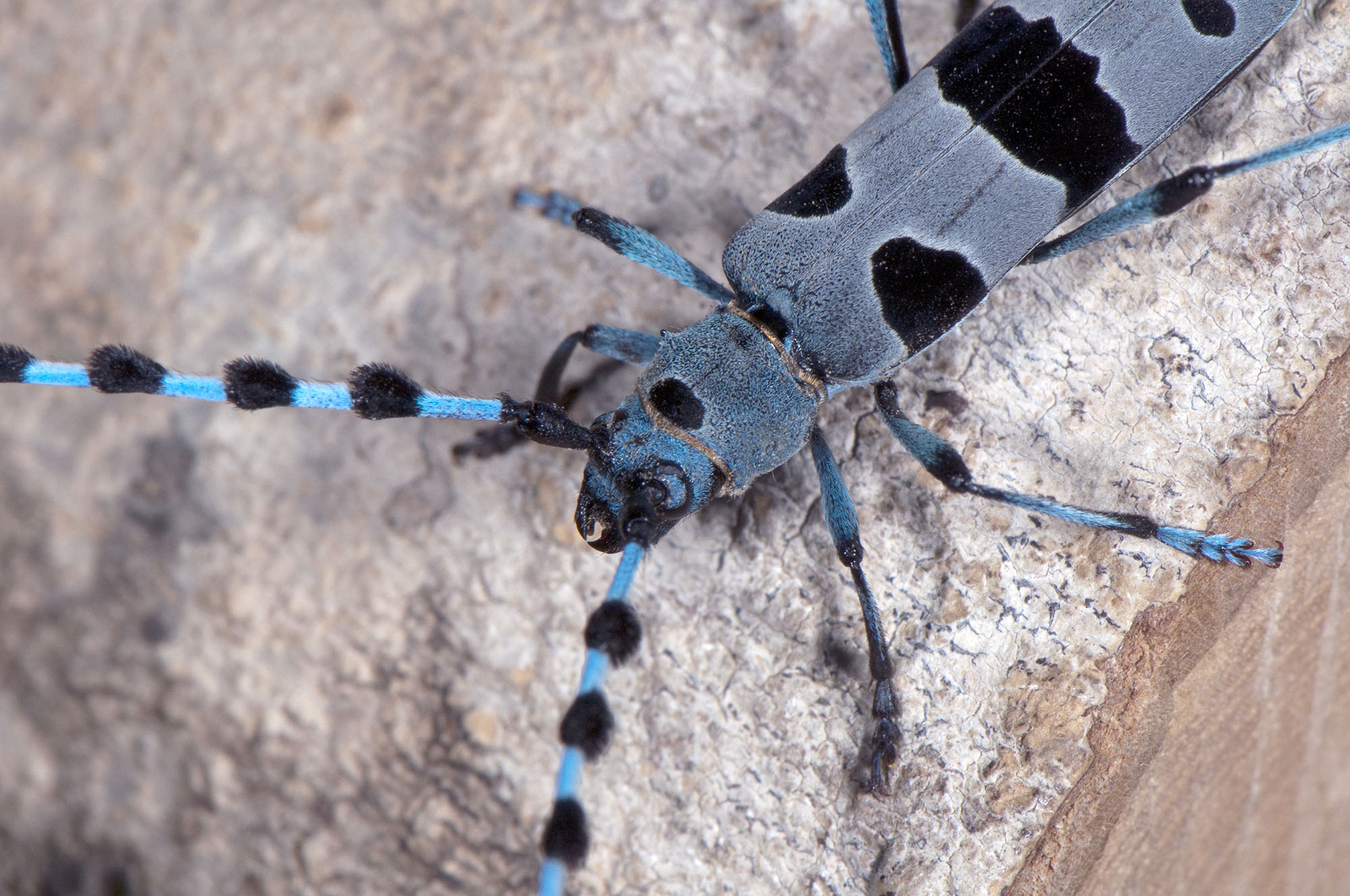
The mounted beetles were collected in: (♂R) - Tellermanovskiy les (Tellerman forest/Теллермановский лес) (N51°20′20″ E41°57′05″; 150 m a.s.l., 9 km SWW Borisoglebsk, Gribanovsky district, Voronezh oblast, Central Federal District, Russia) on July 13, 2009; (♂♀S) - Kálnica village environs (Považský Inovec mountain range, Nové Mesto nad Váhom district, Trenčín region, Slovakia) in July 2023.The living beetles were photographed in: Bezděz Mt. (North Bohemia, July 19, 2009), one of the last (and strictly protected) locality of this beautiful species in Czechia; Krajná Poľana village environs (Svidník district, Prešov region, East Slovakia) on July 28, 2020; Remetské Hámre village environs (Vihorlat Mts., Sobrance district, Košice region, East Slovakia) on June 29, 2019.
Collected by Artem Zaitsev, Roman Hergovits, Daniel Rydzi and Michal Hoskovec
[✮]
Linné C.:
Systema naturæ per regna tria naturæ secundum classes, ordines, genera, species, cum characteribus, differentiis, synonymis, locis.
Systema naturae (Editio 10) Laur. Salvius, Holmiae 1: 824pp [page 392], 1758. [download]
[❖]
Čížek L., Schlaghamerský J., Bořucký J., Hauck D. and Helešic J.:
Range expansion of an endangered beetle: Alpine Longhorn Rosalia alpina (Coleoptera: Cerambycidae) spreads to the lowlands of Central Europe.
Entomologica Fennica 20: 200-206, 2009. [download[▽]
Drag L., Hauck D., Říčan O., Schmitt T., Shovkoon D.F., Godunko R.J., Curletti G., Čéžek L.:
Phylogeography of the endangered saproxylic beetle Rosalia longicorn, Rosalia alpina (Coleoptera, Cerambycidae), corresponds with its main host, the European beech (Fagus sylvatica, Fagaceae).
Journal of Biogeography 45 (12): 2631-2644, 2017. [download[✧]
Campanaro A., Redolfi De Zan L., Hardersen S., Antonini G., Chiari S., Cini A., Mancini E., Mosconi F., Rossi De Gasperis S., Solano E., Bologna M.A., Sabbatini Peverieri G.:
Guidelines for the monitoring of Rosalia alpina.
Nature Conservation 20: 165–203, 2017. [download[✳]
Sláma M.E.F.:
Tesaříkovití – Cerambycidae České republiky a Slovenské republiky / Cerambycidae of the Czech Republic and Slovak Republic.
Milan Sláma private printing, Krhanice, 383pp [pages 95-97], 1998 [ISBN: 80-238-2627-1]. [download
Monitoring of the Rosalia alpina is relatively complicated in the case of its low density occurence. One way to detect the presence of a monitored insect species is to use pheromone traps. Basically, all species of longhorn beetles use pheromones (sexual or aggregation) for intraspecific communication, and this is also the case of R. alpina. For this reason, we isolated, identified and synthesized its aggregating male produced pheromone, 3,5-dimethyl-6-(1-methylbutyl)-pyran-2-one [✩].
[✩]
Žunič Kosi A., Zou Y., Hoskovec M., Vrezec A., Stritih N., Millar J.G.:
Novel, male-produced aggregation pheromone of the cerambycid beetle Rosalia alpina, a priority species of European conservation concern
PLoS One 12 (8): e0183279, 2017. [download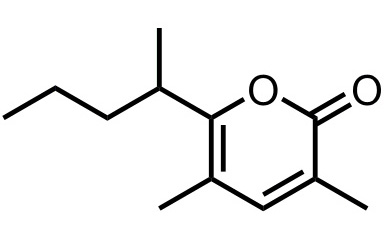
[Photo © Milan Sláma]
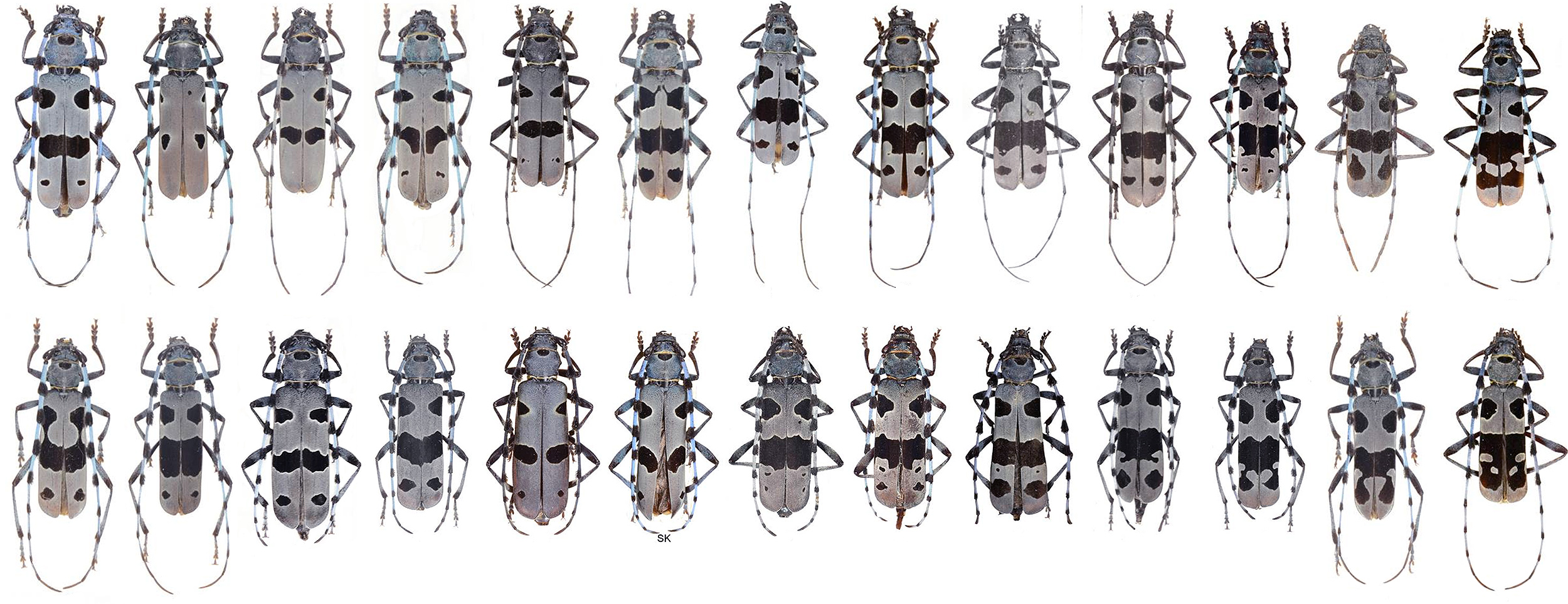
R. alpina elytral pattern is extremely variable, there are (very rarely) specimens completely without dark spots as well as individuals that are almost completely black. Between these two extremes is the most widespread "standard" form (e.g. ♂R) as well as dozens of forms with variously modified or reduced spots.
[Photo © Daniel Rydzi]
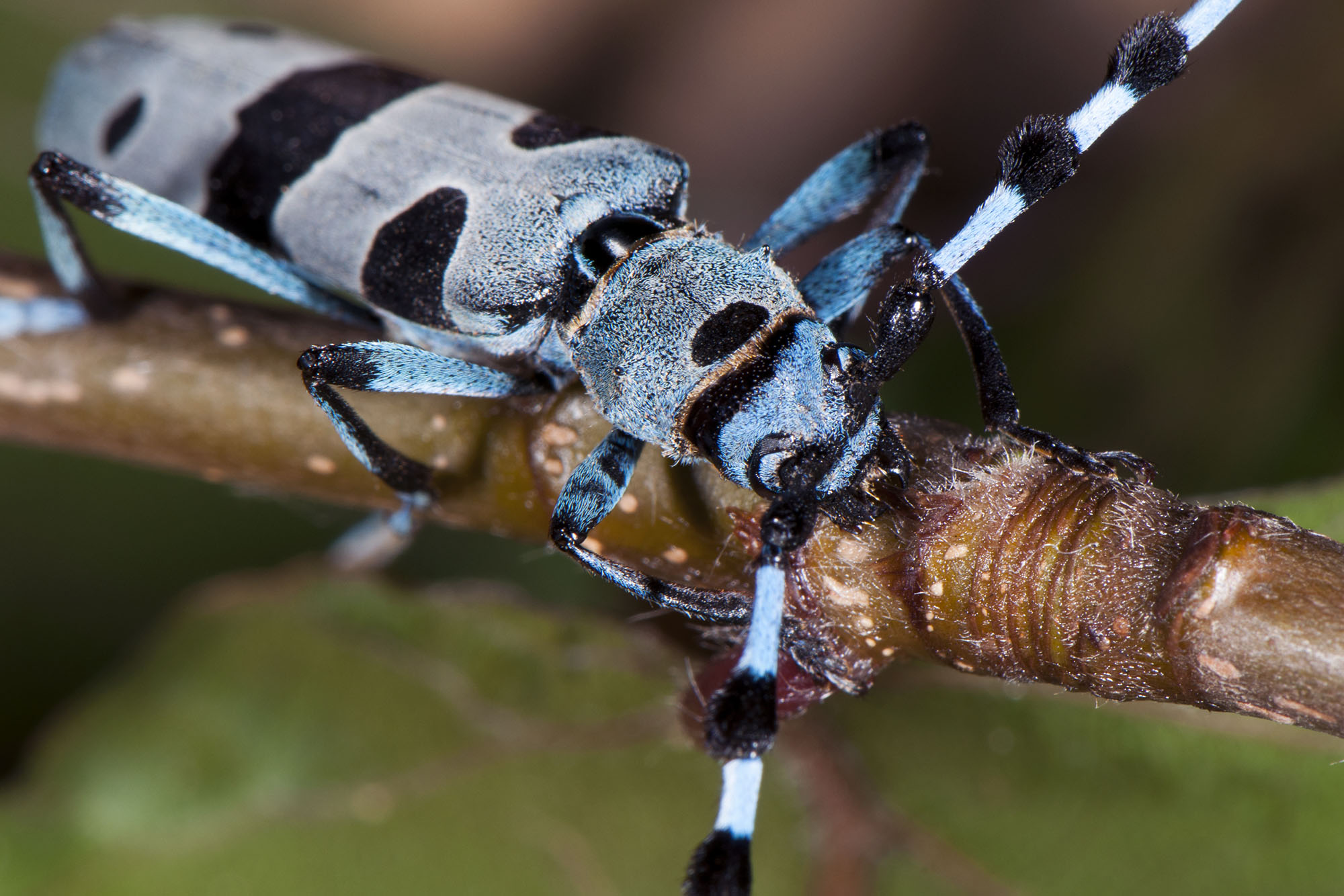
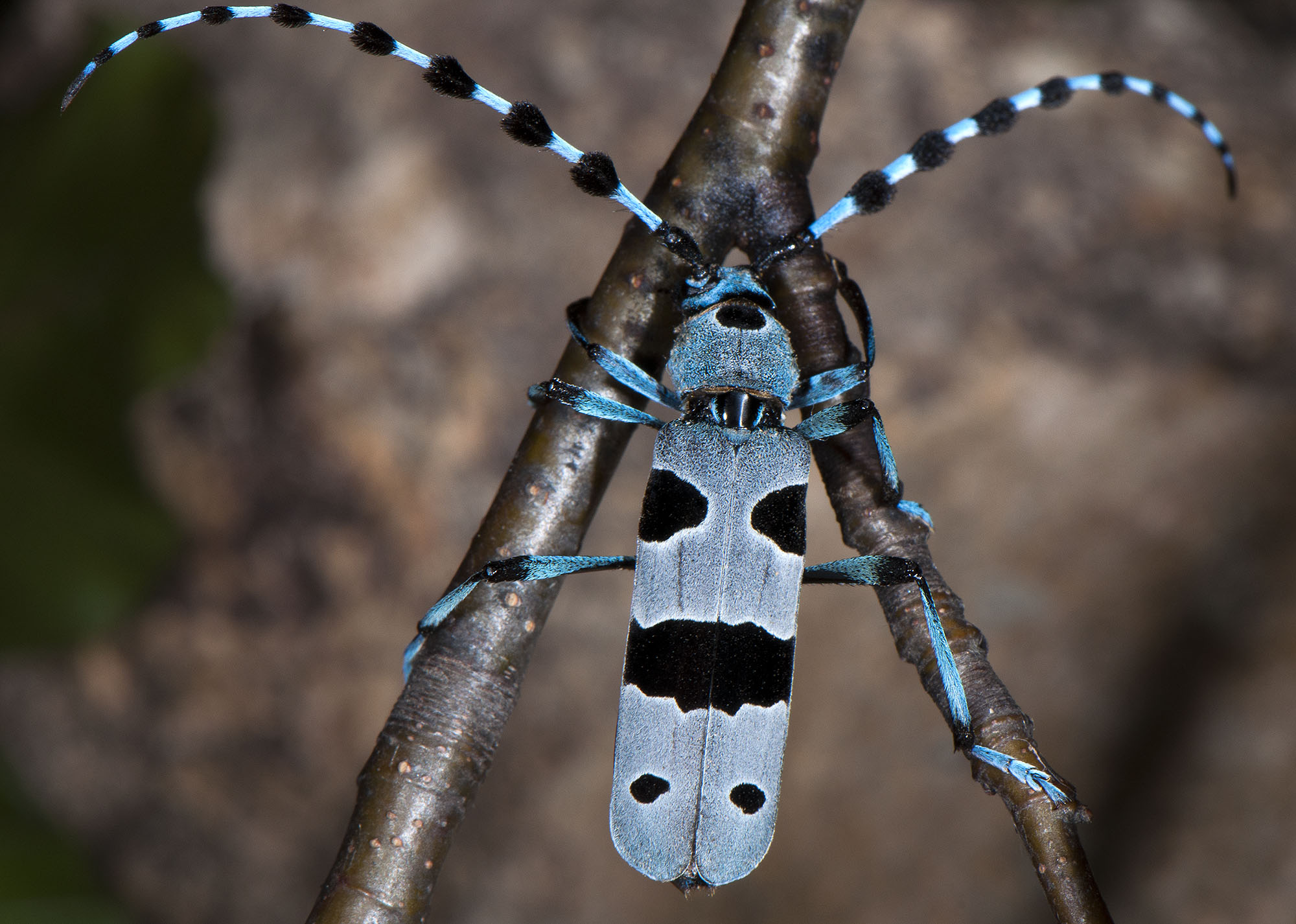
[Photo © Michal Hoskovec]
| Subfamilia | Cerambycinae Latreille, 1802 |
| Tribus | Compsocerini Thomson, 1864 |
| Genus | Rosalia Audinet-Serville, 1833 |
| Species | Rosalia alpina (Linnaeus, 1758) |
| Subspecies | Rosalia alpina alpina (Linnaeus, 1758) |